


Best Passes & Cards in Madrid
Must-See Venues in Madrid
See more venues
All attractions in Madrid
 Madrid


Madrid: Top 10 Things to Do, from Art to Football
Madrid brings the Prado’s art, the Royal Palace and the football cultures of Real Madrid and Atlético into the same city. Spain’s capital and largest city stands on the River Manzanares in the central Iberian Peninsula, on the elevated Castilian plateau. Its grand avenues and public squares give the centre a monumental character, while museums, performances and nightlife sustain a busy cultural life.
The city grew from a late ninth-century fortified settlement and became the permanent seat of the Spanish court in 1561. That royal legacy remains central to its identity, alongside its role as Spain’s political, economic and cultural centre. For visitors, football stadiums are an important part of this wider picture: places to explore the clubs that shape Madrid’s sporting identity, alongside its galleries, parks and historic landmarks.
Top 10 things to do in Madrid
10. Discover Madrid’s major annual celebrations
Madrid’s recurring events bring distinct expressions of city life into its streets. Madrid Pride spans late June and early July, with celebrations drawing an international crowd. La Trashumancia follows a very different tradition: shepherds drive sheep and other livestock through the centre, exercising an ancient right. Both reveal how public space remains central to Madrid’s cultural identity.
9. Walk Gran Vía and see Plaza de Cibeles
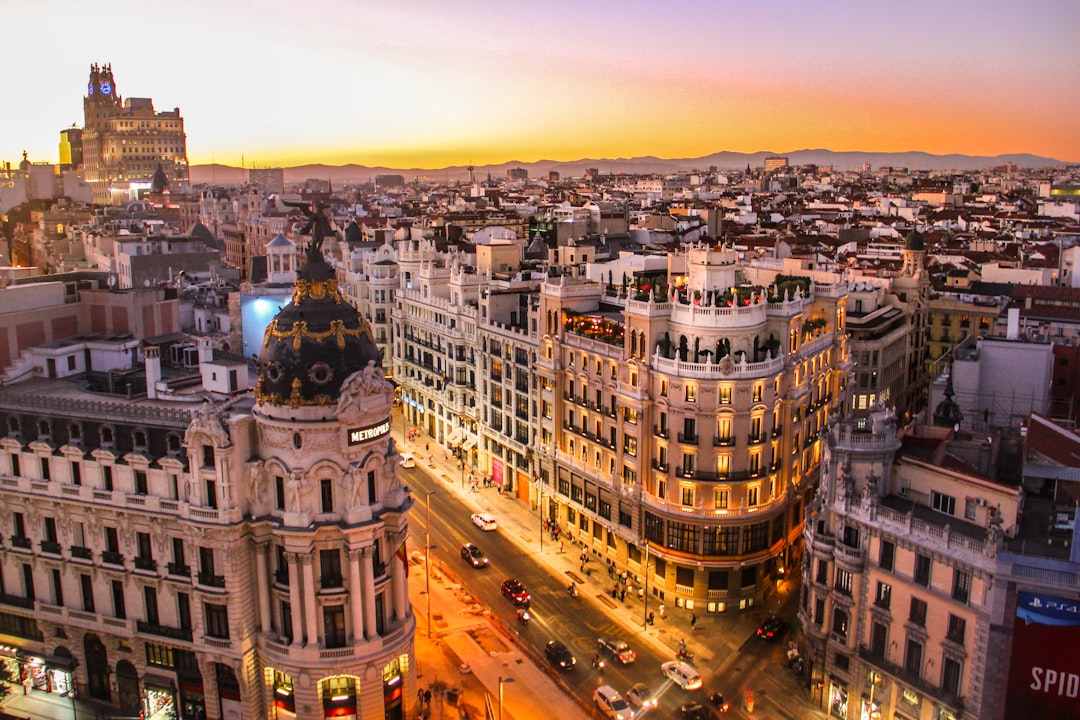
Gran Vía presents Madrid at its most metropolitan, with cinemas, shopping and large illuminated signs along one of its busiest avenues. Plaza de Cibeles adds a more monumental city scene: the neoclassical Cybele Fountain stands beside the imposing former Palace of Communications, now the seat of municipal government. Together, they introduce the capital’s grand urban architecture.
8. Explore Atlético de Madrid’s football culture
Atlético de Madrid is one of the capital’s best-known clubs, competing in Spain’s top division and regularly appearing in European tournaments. A visit to the club’s Metropolitano stadium gives that sporting identity a physical setting. The Atlético de Madrid museum and self-guided tour place the club itself at the centre of the visit.
7. Visit Santiago Bernabéu Stadium
Real Madrid makes football an essential part of the capital’s international identity, and the Santiago Bernabéu Stadium is a defining stop for supporters. Its museum provides a club-focused visit within the stadium setting. The Bernabéu also has a role beyond club football, as one of the Madrid grounds where Spain’s men’s national team plays.
6. Explore the Thyssen-Bornemisza Museum
The Thyssen-Bornemisza Museum completes Madrid’s celebrated trio of major art museums alongside the Prado and Reina Sofía. Built around a baron’s collection of classical art, it complements the holdings of its neighbours. Visit it as a substantial cultural destination in its own right, or use it to broaden an exploration of the museum district around Paseo del Prado.
5. See Picasso’s Guernica at the Reina Sofía
Picasso’s Guernica is the defining draw at the Reina Sofía, Madrid’s major museum of modern art. The institution brings a different period of artistic expression into focus from the Prado’s royal collection. It is an essential stop within the city’s museum triangle, especially for visitors who want modern art to anchor their exploration of Madrid’s collections.
4. Spend time in Retiro Park
Retiro is Madrid’s principal park and a welcome open-air counterpoint to its museums and monumental streets. Its paths and spaces invite an unhurried break from sightseeing. The area around the statue of Alfonso XII also has a social rhythm of its own, with drum circles gathering there on summer evenings.
3. Explore Plaza Mayor and Puerta del Sol
These two squares reveal complementary sides of central Madrid. Plaza Mayor is one of the capital’s best-known monumental spaces. Puerta del Sol is a busy meeting place, marked by the Bear and the Strawberry Tree statue, the former Post Office’s clock tower and Kilometre Zero of Spain’s road network. Together, they form an essential introduction to the historic centre.
2. Visit the Royal Palace of Madrid
The Royal Palace of Madrid gives the city’s royal identity its most imposing architectural expression. One of Europe’s largest palaces, it remains the Spanish monarch’s official residence, although the royal family does not live here. Its continuing use for state ceremonies connects this emblematic building with the public life of the modern monarchy.
1. Discover the Prado Museum
The Prado is the foremost stop for understanding Madrid’s exceptional artistic heritage. Its collection grew from the Spanish royal holdings and includes some of Goya’s most famous works. Give this museum a central place in a first visit: it brings the capital’s royal past and cultural importance together through the paintings themselves, at the heart of Madrid’s renowned art district.